How to Make Money with Pinterest in 2026 (No Experience Needed)

When I first heard people say they were making money with Pinterest, I honestly didn’t believe them.
Like many beginners, I thought Pinterest was just another social media platform filled with recipes, wedding inspiration, fashion ideas, and home décor. I never imagined it could become one of the most powerful traffic sources for bloggers and online business owners.
Everything changed when I started blogging.
I spent weeks writing articles, only to watch them receive little to no traffic. Google rankings were slow, social media posts disappeared within hours, and it felt like nobody was reading my work. That’s when I decided to give Pinterest a serious try—not because I expected overnight success, but because I had nothing to lose.
The first few weeks were disappointing. My pins barely received any impressions, let alone clicks. But instead of giving up, I spent time learning how Pinterest actually works. I discovered that Pinterest isn’t a social media platform at all, it’s a visual search engine. That simple realization completely changed my strategy.
Instead of creating pretty images for likes, I started creating useful pins for people who were actively searching for answers. Slowly but surely, those pins began driving visitors to my website. Some articles that barely received traffic from Google suddenly started getting hundreds of visits from Pinterest.
That’s when I realized something important.
Pinterest doesn’t pay you directly. It gives you something even more valuable—targeted visitors who are already interested in what you offer.
If you’ve been wondering whether Pinterest can actually help you earn money, the answer is yes. But it doesn’t happen through shortcuts or secret tricks. It happens by understanding how the platform works and using it to build a real online business.
In this guide, I’ll explain exactly how beginners can make money with Pinterest, the methods that actually work, and the mistakes you should avoid along the way.
Is It Really Possible to Make Money with Pinterest?
The short answer is yes—but probably not in the way you’re imagining.
One of the biggest myths on the internet is that Pinterest pays creators for views or followers. It doesn’t.
Unlike YouTube, Pinterest doesn’t have a creator monetization program where you earn money every time someone views your content. Instead, Pinterest acts as a discovery platform. It connects people who are searching for ideas with creators who provide helpful content.
Think of Pinterest as a bridge.
On one side are millions of people searching for solutions every day. On the other side is your blog, online store, digital product, or service. Pinterest simply helps those people find you.
Once visitors land on your website, that’s where the money is made.
This is why so many bloggers, entrepreneurs, and small business owners invest time in Pinterest marketing. The platform continues sending traffic long after you’ve published a pin, making it one of the few places where your work can keep paying off for months—or even years.
Why Pinterest Is Different from Instagram or Facebook
If you’ve only used Pinterest casually, it’s easy to think it’s just another social media app. In reality, it’s much closer to Google than Instagram.
People don’t usually open Pinterest to see what their friends are doing.
They open it because they’re looking for something.
Someone searching for “budget planner printable” already wants a budgeting tool. Someone searching for “healthy meal prep ideas” is already planning meals. Someone searching for “side hustles for beginners” is actively looking for ways to earn extra income.
This search intent makes Pinterest incredibly valuable.
Instead of interrupting people with content they didn’t ask for, Pinterest places your content in front of users who are already interested in the topic.
That’s why Pinterest traffic often converts better than traffic from traditional social media platforms.
How Does Pinterest Actually Help You Earn Money?
Many beginners think they need millions of followers before earning anything online. Thankfully, Pinterest doesn’t work that way. Even a relatively new account can attract visitors if its pins answer popular search queries. Imagine writing an article titled “10 Easy Digital Products Students Can Sell Online.”
You create several eye-catching Pinterest pins linking to that article. Over time, those pins appear in Pinterest search results whenever someone looks for digital product ideas.
As visitors click through to your website, you now have several ways to generate income.
You might display advertisements on your blog. You could recommend useful products through affiliate marketing. You could sell your own eBook, printable planner, or online course. If you’re a freelancer, you could even attract potential clients.
The important thing to understand is that Pinterest isn’t your income source—it’s your traffic source. Your website or business is what turns that traffic into revenue.
Start by Choosing the Right Niche
One mistake I see beginners make all the time is trying to post about everything. One day they publish fitness content. The next day it’s travel. Then cryptocurrency. Then recipes. This confuses both Pinterest and your audience.
Instead, choose a niche that you genuinely enjoy and can consistently create content around.
Some of the best-performing Pinterest niches include personal finance, home décor, recipes, fitness, beauty, DIY projects, blogging, online business, parenting, education, and digital products.
The goal isn’t to choose the biggest niche. It’s to choose one where you can become genuinely helpful.
If people repeatedly find value in your content, Pinterest has every reason to continue recommending your pins.
Pro Tip: Before writing an article, type your topic into Pinterest’s search bar. The autocomplete suggestions are real keywords people are searching for every day.
Create Content That Solves Real Problems
Here’s something I wish someone had told me earlier. People don’t search for content. They search for solutions.
Instead of writing an article called “Pinterest Tips,” write something far more specific, like “15 Pinterest Marketing Tips That Helped Me Double My Blog Traffic.”
Specific titles attract specific readers. The same principle applies to your pins. A pin saying “Healthy Recipes” is unlikely to stand out.
A pin saying “20 High-Protein Breakfast Recipes Ready in 15 Minutes” immediately tells readers exactly what they’ll get. The more clearly you communicate value, the more likely someone is to click.
Design Pins People Want to Click
Pinterest is a visual platform, so first impressions matter. Fortunately, creating attractive pins doesn’t require professional design skills. Clean layouts often outperform overly complicated designs. Use bold headlines, easy-to-read fonts, high-quality images, and enough white space to keep everything readable. Your pin should answer one simple question within a few seconds:
“Why should someone click this?”
Avoid cluttering your design with too much text or unnecessary graphics. Simple, clean, and informative almost always wins.
Learn Basic Pinterest SEO
This was probably the biggest breakthrough in my own Pinterest journey. Pinterest doesn’t rank pins randomly. It relies heavily on keywords.
When you optimize your titles, descriptions, board names, and blog posts with phrases people are actually searching for, Pinterest gains a better understanding of your content.
For example, instead of using a vague title like “Online Business,” you could target a phrase such as “How to Start an Online Business from Home.”
Small improvements like these can dramatically increase your visibility over time. Remember, Pinterest isn’t trying to guess what your content is about.
You need to tell it.
Seven Proven Ways to Make Money with Pinterest
Once Pinterest starts sending visitors to your website, there are plenty of ways to turn that traffic into income.
1. Blogging
This is my favourite method because it’s sustainable. You publish valuable articles, Pinterest brings visitors, and your blog earns money through display ads, affiliate marketing, sponsorships, or digital product sales.
Every new article becomes another opportunity to attract readers.
2. Sell Digital Products
Digital products require work upfront but can generate income repeatedly.
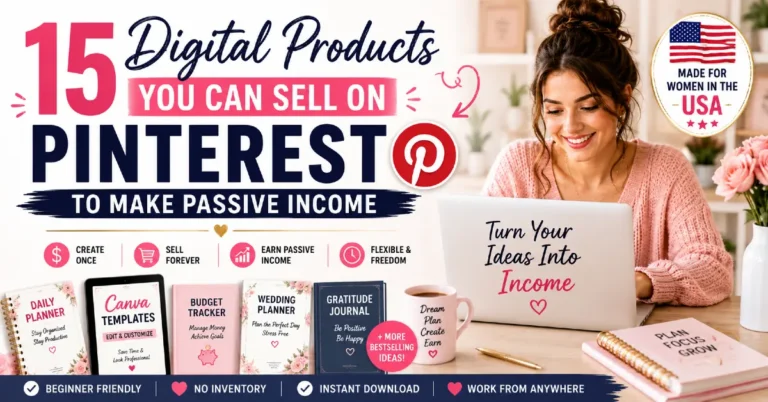
Popular examples include printable planners, budgeting templates, meal planners, Notion templates, journals, eBooks, and social media templates.
Pinterest users already love printable resources, making this one of the easiest business models to combine with the platform.
3. Affiliate Marketing
Affiliate marketing involves recommending products or services you genuinely trust. When someone purchases through your referral link, you earn a commission without increasing the customer’s price.
The most successful affiliate marketers focus on solving problems rather than pushing products. Trust always comes first.
4. Grow an Email List
Many experienced bloggers consider their email list their most valuable business asset. Pinterest can help you attract subscribers by offering free guides, checklists, or printable resources.
Once someone joins your email list, you can continue sharing helpful content and promote products naturally over time.
5. Sell Online Courses
If you’ve developed expertise in a particular subject, consider packaging your knowledge into an online course.
Pinterest works exceptionally well for educational content because users are actively searching to learn something new.
6. Offer Freelance Services
Pinterest isn’t just useful for products. It can also attract clients.
Graphic designers, writers, photographers, SEO consultants, virtual assistants, and coaches often publish educational content that naturally leads readers toward their services.
7. Promote an Online Store
If you sell physical products, Pinterest can become a long-term source of customers.
Products with strong visual appeal—such as stationery, home décor, fashion, handmade crafts, or kitchen accessories—often perform particularly well.
Mistakes That Keep Most Beginners from Succeeding
After spending time in the blogging world, I’ve noticed that most Pinterest failures aren’t caused by bad content. They’re caused by unrealistic expectations. Many people expect thousands of visitors after posting just a few pins.
Others create beautiful graphics but ignore keywords completely. Some publish ten different topics in the same week, making it impossible for Pinterest to understand their account.
Perhaps the biggest mistake of all is quitting too early. Pinterest rewards consistency.
A pin you publish today might not gain traction immediately, but six months later it could become one of your highest-performing pieces of content. That’s why patience is one of the most valuable skills you can develop.
How Long Does It Take to See Results?
This is probably the question I receive most often. The honest answer is that Pinterest is a long-term strategy, not a get-rich-quick scheme.
Some creators start seeing noticeable traffic within a couple of months, while others take longer depending on their niche, content quality, competition, and consistency.
The encouraging part is that Pinterest content has a much longer lifespan than content on most social media platforms.
A single well-optimised pin can continue bringing visitors for months or even years. That makes the effort worthwhile.
Final Thoughts
Pinterest completely changed the way I think about online traffic.
Instead of constantly chasing followers or worrying about social media algorithms, I now focus on creating genuinely useful content that answers real questions. Pinterest does the job of connecting that content with people who are already looking for it.
If you’re just starting out, don’t worry about making thousands of dollars in your first month. Focus on creating one helpful article, one well-designed pin, and one solution that genuinely improves someone’s day. Then repeat the process consistently.
Over time, those small efforts can grow into a library of content that continues working for you long after you’ve published it.
Making money with Pinterest isn’t about luck. It’s about understanding how the platform works, creating valuable content, and being patient enough to let your efforts compound. If you’re willing to invest the time, Pinterest can become much more than a source of inspiration—it can become a powerful engine for growing your blog, business, and online income.
Also Read: