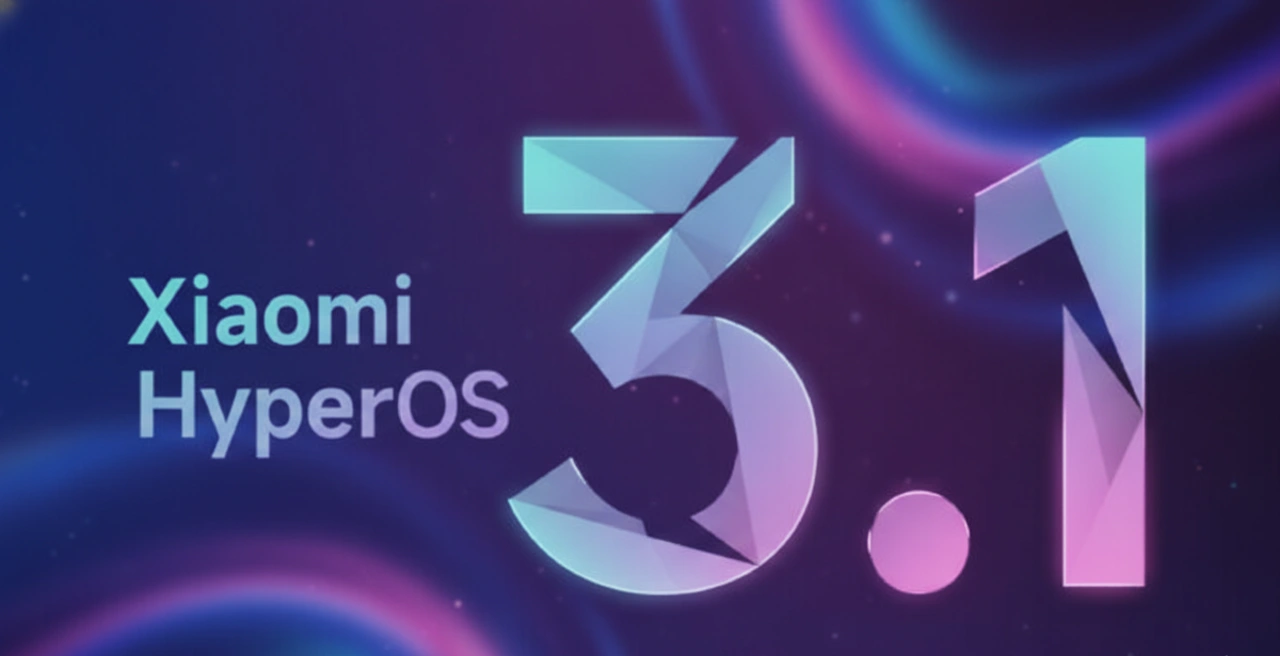
Currently, names like HyperOS 3.1 and HyperOS 3.3 are circulating on the internet. While these might appear to be major system updates, the reality is somewhat different. In fact, Xiaomi has not launched a separate 3.1 or 3.3 platform after HyperOS 3.
The tech community and leak sources began referring to some major internal updates of HyperOS 3 as 3.1 or 3.3, according to their own interpretations. However, from the company’s perspective, the system remains HyperOS 3.0.
What is SOTA, and why was it introduced?
In the Chinese version of HyperOS, Xiaomi has adopted a new method called SOTA (Super OTA).
Its purpose is straightforward:
- To provide bug fixes
- To improve performance
- To add minor changes
And all this is done without needing to change the entire version number.
How does the new numbering system work?
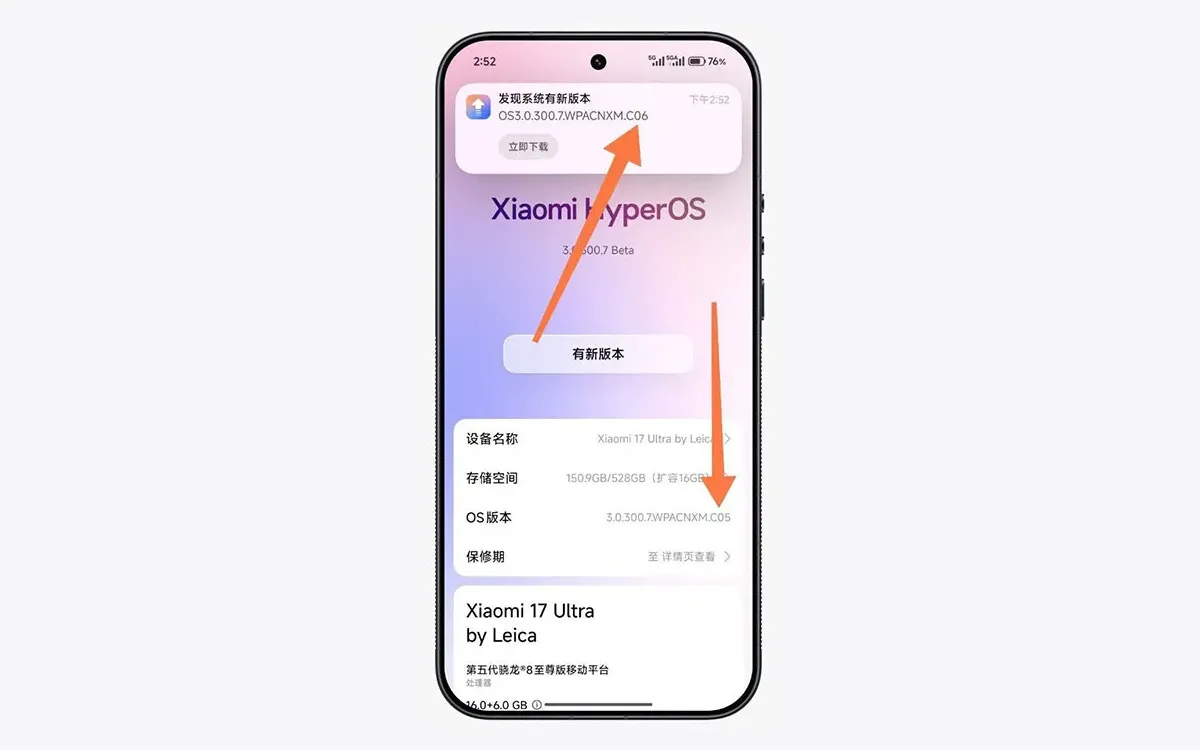
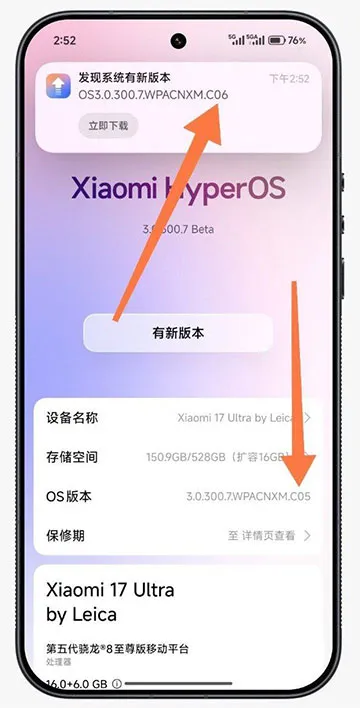
Now, you won’t see 3.1 or 3.2 in the updates; instead, you’ll find tags like C05, C06, C07 at the end of the version number.
These tags indicate how many times improvements have been made within the system.
In simple terms
If a device showsOS3.0.300.5.WPYCNXM.C06 means that it is still HyperOS 3.0, but it has received the sixth Super OTA update.
It
Conclusion
HyperOS 3.1 or 3.3 are not a separate system. They are simply names given to the step-by-step improvements made within HyperOS 3, which people are mistakenly interpreting as different versions.
Also Read:
Xiaomi’s HyperOS 3 Android 16 Rollout Nears Completion Worldwide, Final Eligible Devices Listed
Xiaomi Confirms New HyperOS 3 Bug Fixes – Camera, Music, Fingerprint Issues on These Devices
New Global HyperOS 3 Update is Coming for the POCO X6 Pro
Xiaomi 17 Ultra Global Version Leaked: Everything from Design to Price Revealed